Office Syndrome Checklist: What Level Are You At?
Last updated: 15 May 2026
1101 Views
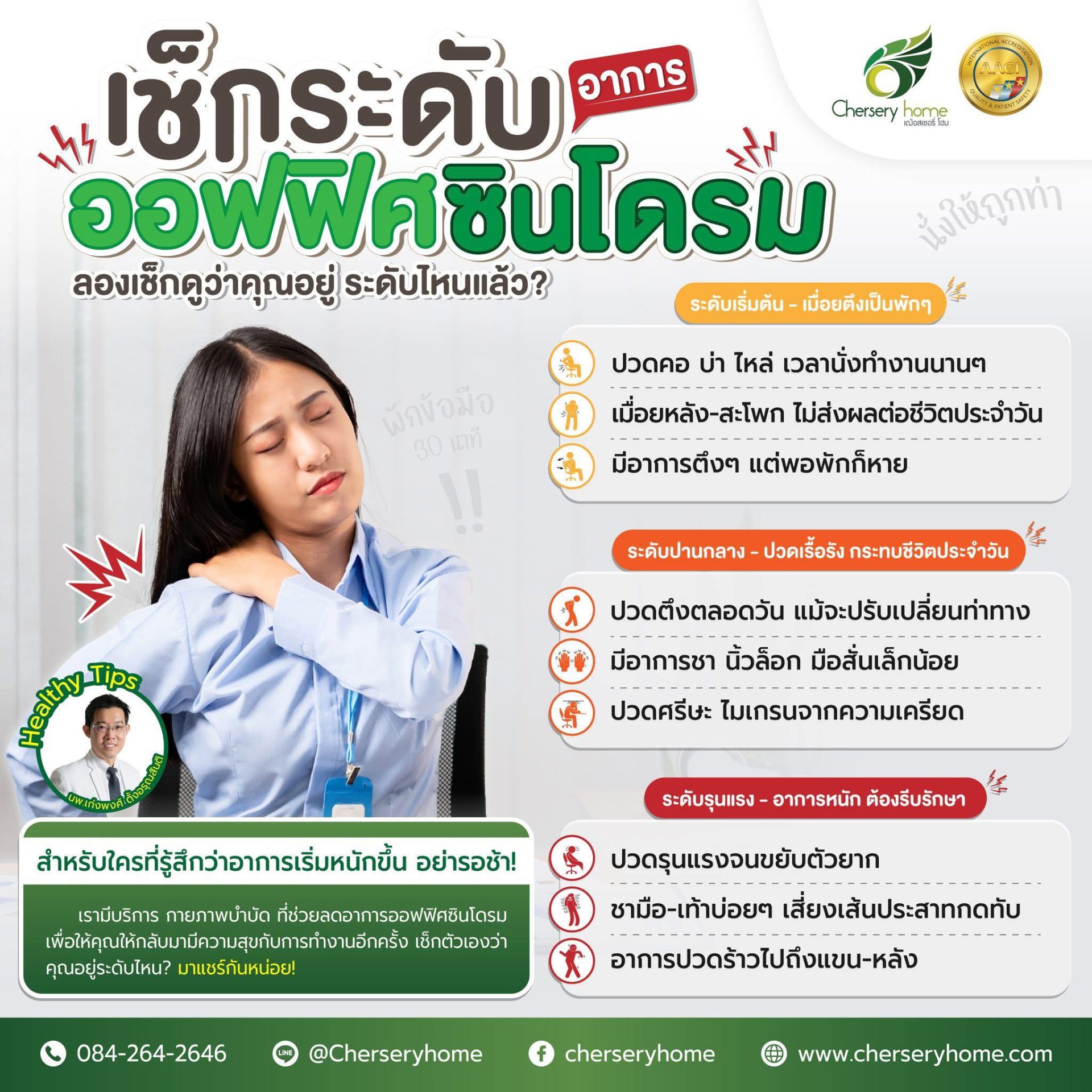
Office Syndrome refers to muscle pain and discomfort caused by prolonged sitting and repetitive work posture, especially among people who work with computers or smartphones for long hours.
Let’s check which level you are currently experiencing.
Mild Level – Occasional muscle stiffness
Neck, shoulder, and upper back pain after long sitting hours
Mild lower back or hip discomfort that does not affect daily life
Tightness that improves after rest
Moderate Level – Chronic pain affecting daily life
Persistent muscle pain even after adjusting posture
Numbness, finger stiffness, or mild hand tremors
Headaches or migraines caused by stress
Severe Level – Requires medical attention
Intense pain that makes movement difficult
Frequent numbness in hands or feet, possible nerve compression
Pain radiating to arms, back, or shoulders
If you are experiencing moderate to severe symptoms, it is important to adjust your work habits and seek professional care to prevent long-term complications.
Let’s check which level you are currently experiencing.
Mild Level – Occasional muscle stiffness
Neck, shoulder, and upper back pain after long sitting hours
Mild lower back or hip discomfort that does not affect daily life
Tightness that improves after rest
Moderate Level – Chronic pain affecting daily life
Persistent muscle pain even after adjusting posture
Numbness, finger stiffness, or mild hand tremors
Headaches or migraines caused by stress
Severe Level – Requires medical attention
Intense pain that makes movement difficult
Frequent numbness in hands or feet, possible nerve compression
Pain radiating to arms, back, or shoulders
If you are experiencing moderate to severe symptoms, it is important to adjust your work habits and seek professional care to prevent long-term complications.
Related Content
In today’s world, food products and health supplements are heavily marketed, making it difficult for consumers to distinguish between true nutritional value and misleading claims. Here are three practical tips to help you choose food wisely based on science and nutrition.
24 Jun 2026

หมายถึงสภาพที่หัวใจไม่สามารถสูบฉีดเลือดไปเลี้ยงอวัยวะต่างๆของร่างกายได้อย่างมีประสิทธิภาพและเพียงพอต่อความต้องการ ส่งผลทำให้เกิดการขาดออกซิเจนซึ่งนำพามาโดยเลือดแดง รวมถึงไตที่ได้รับเลือดไปเลี้ยงลดลงทำให้เกิดอาการข้างเคียงคือบวมน้ำและเกลือแร่คั่งในร่างกายรวมถึงมีปัสสวะที่ลดลงด้วยการรักษาและวินิจฉัยมักต้องมาพบแพทย์ จะเน้นปรับร่างกายด้วยการรับประทานหรือฉีดยา รักษาตามสาเหตุหลัก การเลือกรับประทานอาหารและปรับเปลี่ยนพฤติกรรมปรับชีวิต งดเหล้าและบุหรี่ รวมถึงดื่มน้ำในปริมาณที่เหมาะสม ออกกำลังกายที่เหมาะกับโรค และสังเกตอาการที่ผิดปกติ
19 Mar 2025
Airway Clearance Techniques (ACTs) are therapeutic methods designed to help remove excess mucus and respiratory secretions from the airways. These techniques can improve breathing efficiency, reduce the risk of respiratory complications, and support overall lung health, particularly in older adults and individuals with chronic respiratory conditions.
17 Jun 2026
