How to Choose Healthy Food Without Being Misled by Marketing Claims
Last updated: 24 Jun 2026
611 Views
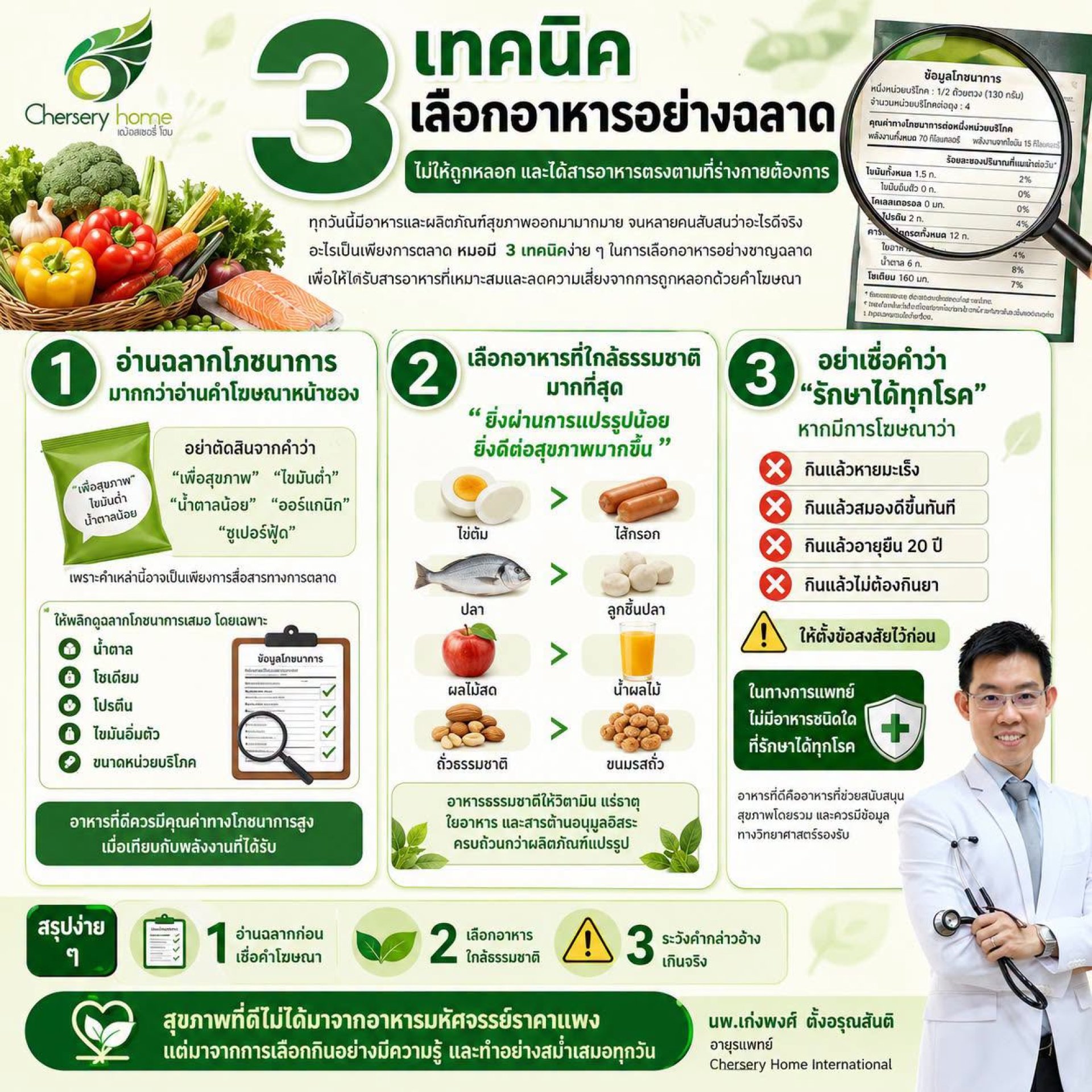
How to Choose Food Without Being Misled—and Get the Nutrition Your Body Needs
Nowadays, there are countless food products and health claims in the market, which can easily confuse consumers between real nutritional value and marketing strategies.
Here are 3 simple and practical tips to help you choose food more wisely and support long-term health.
✅ 1. Read Nutrition Labels, Not Just Front Packaging Claims
Do not rely on phrases such as:
“Healthy”
“Low fat”
“Low sugar”
“Organic”
“Superfood”
These may be marketing terms rather than scientific guarantees.
Instead, always check the nutrition facts label, especially:
• Sugar content
• Sodium levels
• Protein content
• Saturated fat
• Serving size
A healthy food should provide good nutritional value relative to its energy content.
2. Choose Foods as Close to Their Natural State as Possible
A simple rule is:
“The less processed, the better for your health.”
For example:
Boiled eggs are better than sausages
Fresh fish is better than fish balls
Fresh fruits are better than fruit juice
Natural nuts are better than flavored snacks
Minimally processed foods contain more vitamins, minerals, fiber, and antioxidants compared to ultra-processed products.
⚠️ 3. Be Cautious of Overstated Health Claims
Be skeptical when you see claims such as:
❌ Cures cancer
❌ Improves brain function instantly
❌ Makes you live 20 years longer
❌ Eliminates the need for medication
In medical science, no single food can cure all diseases. Healthy food should support overall well-being and be backed by scientific evidence.
Summary
Read nutrition labels instead of believing marketing claims
Choose foods close to their natural form
Avoid exaggerated health claims
Healthy eating is not about expensive “miracle foods,” but about making informed and consistent choices every day.
Dr. Gengpong Tangaroonsanti
Internal Medicine Physician
Chersery Home International
Nowadays, there are countless food products and health claims in the market, which can easily confuse consumers between real nutritional value and marketing strategies.
Here are 3 simple and practical tips to help you choose food more wisely and support long-term health.
✅ 1. Read Nutrition Labels, Not Just Front Packaging Claims
Do not rely on phrases such as:
“Healthy”
“Low fat”
“Low sugar”
“Organic”
“Superfood”
These may be marketing terms rather than scientific guarantees.
Instead, always check the nutrition facts label, especially:
• Sugar content
• Sodium levels
• Protein content
• Saturated fat
• Serving size
A healthy food should provide good nutritional value relative to its energy content.
2. Choose Foods as Close to Their Natural State as Possible
A simple rule is:
“The less processed, the better for your health.”
For example:
Boiled eggs are better than sausages
Fresh fish is better than fish balls
Fresh fruits are better than fruit juice
Natural nuts are better than flavored snacks
Minimally processed foods contain more vitamins, minerals, fiber, and antioxidants compared to ultra-processed products.
⚠️ 3. Be Cautious of Overstated Health Claims
Be skeptical when you see claims such as:
❌ Cures cancer
❌ Improves brain function instantly
❌ Makes you live 20 years longer
❌ Eliminates the need for medication
In medical science, no single food can cure all diseases. Healthy food should support overall well-being and be backed by scientific evidence.
Summary
Read nutrition labels instead of believing marketing claims
Choose foods close to their natural form
Avoid exaggerated health claims
Healthy eating is not about expensive “miracle foods,” but about making informed and consistent choices every day.
Dr. Gengpong Tangaroonsanti
Internal Medicine Physician
Chersery Home International
Related Content

Chersery Home International operates four geriatric rehabilitation centers providing comprehensive care for post-surgical patients, stroke rehabilitation, bedridden patients, and palliative care.
24 Jun 2026

Discover how innovative robotics is transforming elderly healthcare by enhancing safety, precision, and continuity of care while preserving compassion and human connection.
20 May 2026

การออกกำลังกายมีประโยชน์อย่างยิ่งสำหรับผู้ป่วยโรคมะเร็ง แต่ผู้ป่วยส่วนใหญ่มักมีปัญหาในการเริ่มต้นการออกกำลังกาย เช่น กลัวว่าออกกำลังกายแล้วจะเป็นอันตรายต่อร่างกาย รู้สึกอ่อนเพลียง่ายจึงไม่อยากออกกำลังกาย หรืออยากออกกำลังกายแต่ไม่ทราบว่าควรเริ่มต้นอย่างไรดี
19 Mar 2025
