ปอดบวม (Pneumonia) อาการและการรักษา
ปอดบวม (Pneumonia) ในผู้สูงอายุ: อาการ สาเหตุ และแนวทางการรักษา
โรคปอดบวม
ปอดบวมเป็นภาวะติดเชื้อที่ทำให้ถุงลมในปอดอักเสบ ซึ่งเกิดจากแบคทีเรีย ไวรัส หรือเชื้อรา ทุกคนมีโอกาสป่วยได้ แต่ ผู้สูงอายุมีความเสี่ยงสูงกว่า เนื่องจากภูมิคุ้มกันที่อ่อนแอลง
สาเหตุของโรคปอดบวมในผู้สูงอายุ
เชื้อแบคทีเรีย: แบคทีเรีย Streptococcus pneumoniae เป็นสาเหตุที่พบบ่อยที่สุดในผู้สูงอายุ
เชื้อไวรัส: ไวรัสที่สามารถทำให้เกิดโรคปอดบวมได้รับการระบุไว้เช่น Influenza A และ B, หรือ Respiratory Syncytial Virus (RSV)
เชื้อร่วมกัน: เช่นเชื้อ Mycoplasma pneumoniae ที่เป็นสาเหตุของโรคปอดบวมชนิดอื่นๆ
อาการของโรคปอดบวมในผู้สูงอายุ
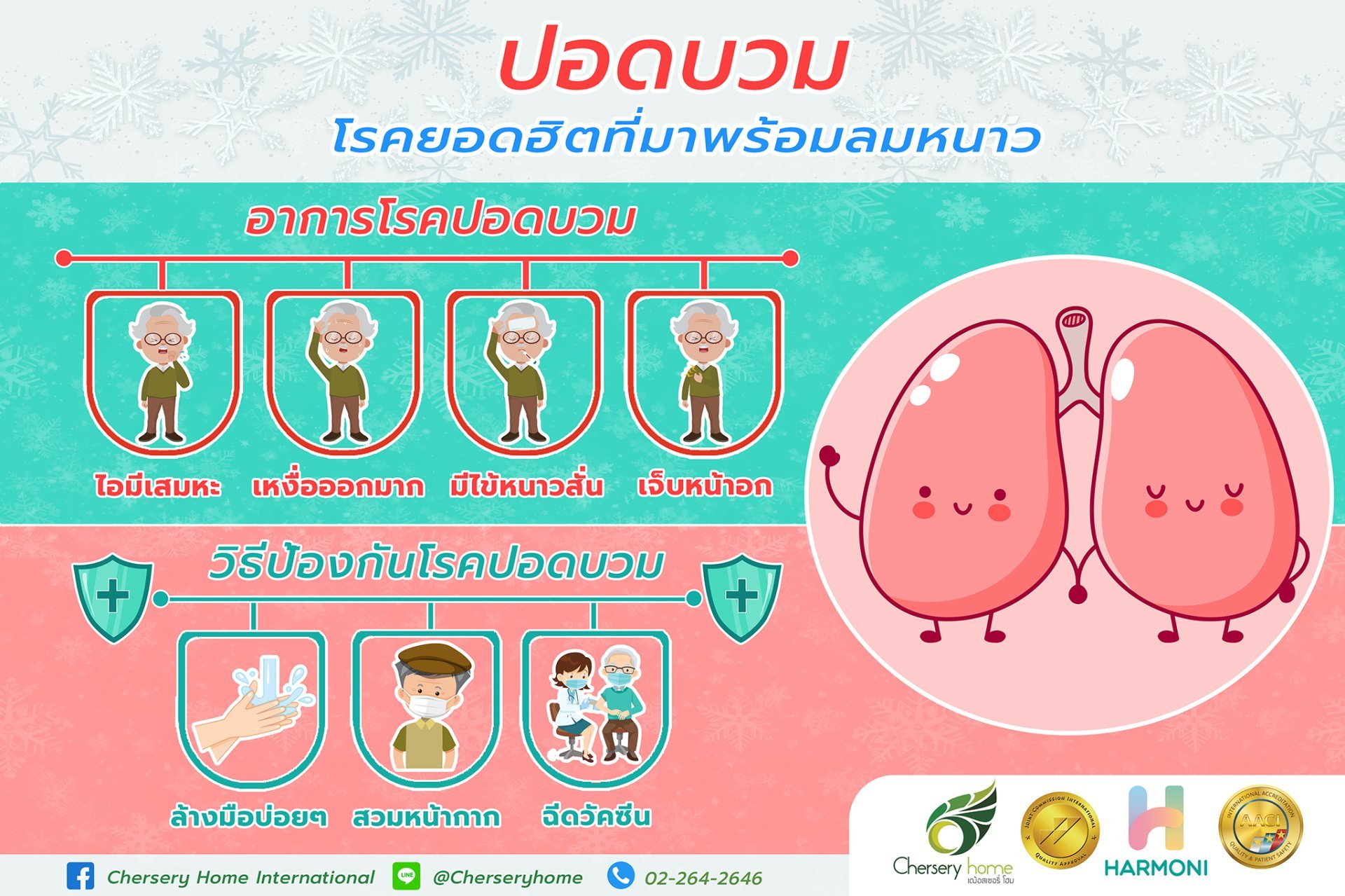
ไอและมีเสมหะ
เหงื่อออกมาก
มีไข้สูง หนาวสั่น
หายใจลำบาก อ่อนเพลียผิดปกติ
การป้องกันโรคปอดบวมในผู้สูงอายุ
การฉีดวัคซีน: การฉีดวัคซีนป้องกันโรคไข้หวัดใหญ่ และวัคซีนป้องกันโรคปอดบวมสามารถช่วยลดความเสี่ยงในกลุ่มผู้สูงอายุ
การล้างมือ: การล้างมืออย่างสม่ำเสมอเพื่อป้องกันการแพร่เชื้อ
การหลีกเลี่ยงการสัมผัสคนที่เป็นไข้: หากมีคนในบ้านเป็นไข้หรือมีอาการโรคปอดบวม ควรหลีกเลี่ยงการสัมผัสและใกล้ชิดในระยะเวลาที่มีความเสี่ยงสูง
การรักษาโรคปอดบวมในผู้สูงอายุ
การให้ยาปฏิชีวนะ: การรักษาโรคปอดบวมในผู้สูงอายุตัวแรกคือการให้ยาปฏิชีวนะ เพื่อกำจัดเชื้อ
การรักษาตามอาการ: การรับประทานยาลดไข้และยาลดอาการไอ เพื่อช่วยบรรเทาอาการ
การให้ออกซิเจน: ในกรณีที่ออกซิเจนในเลือดต่ำ
การรักษาในโรงพยาบาล: กรณีรุนแรง หรือผู้สูงอายุที่มีปัจจัยเสี่ยง อาจต้องรับการรักษาในโรงพยาบาล
ปอดบวมในผู้สูงอายุอาจเป็นอันตรายถึงชีวิต การสังเกตอาการและเข้ารับการรักษาอย่างรวดเร็วคือกุญแจสำคัญ หากสงสัยว่าตนเองหรือคนใกล้ตัวมีความเสี่ยง ควรพบแพทย์โดยเร็ว