Nutrition for the Elderly: Healthy Eating for Strong Aging
Last updated: 23 Apr 2026
1701 Views
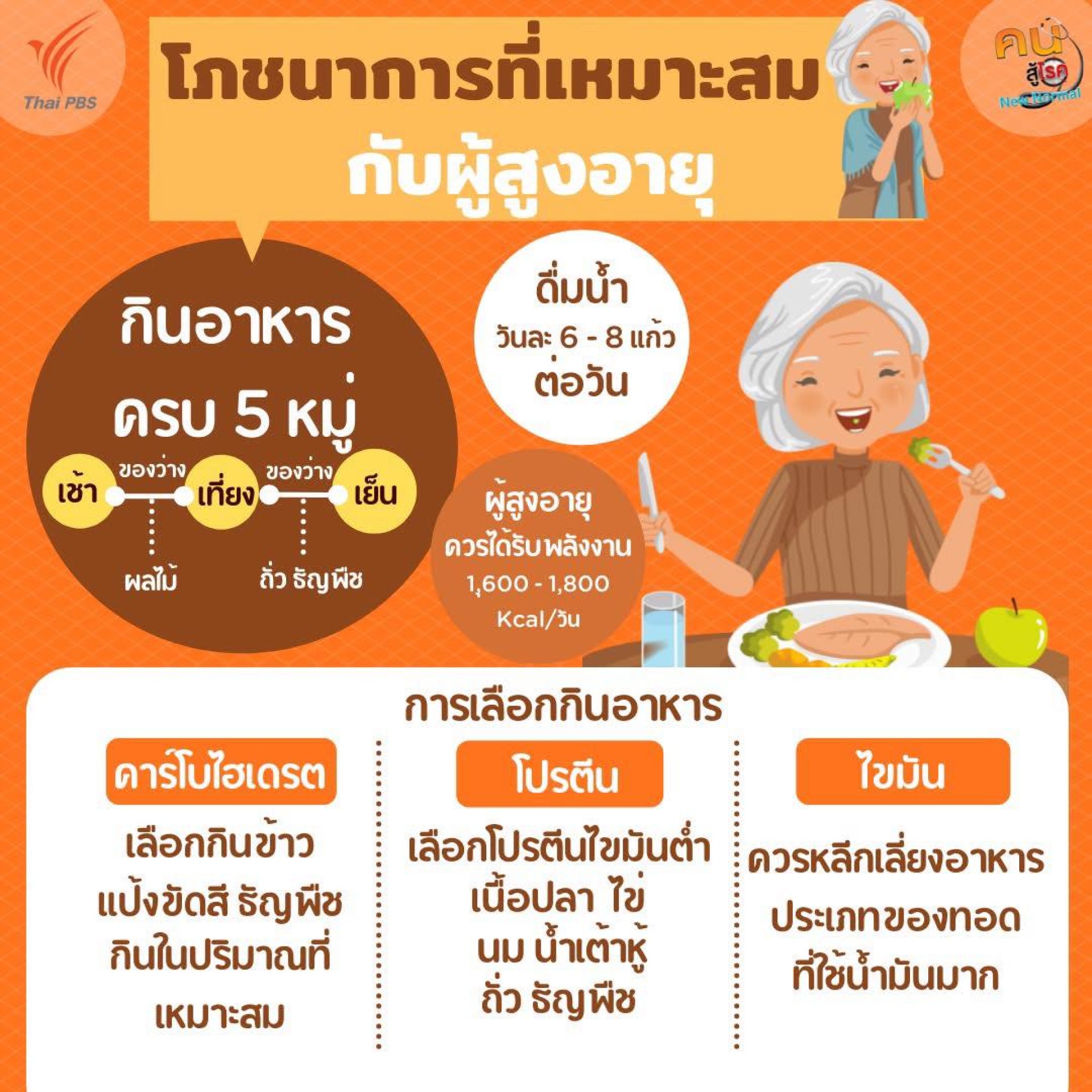
Proper nutrition is essential for maintaining health and well-being in older adults. Dietary habits should be adjusted to meet the changing needs of the body, ensuring a balanced intake from all five food groups.
The recommended daily energy intake for the elderly is approximately 1,600–1,800 kcal per day. Eating a variety of foods helps provide essential nutrients needed for overall health.
Healthy eating guidelines for older adults include:
Eating a variety of foods from all five food groups, with three main meals per day: breakfast, lunch, and dinner
Choosing fruits and vegetables as snacks between meals
Drinking at least 6–8 glasses of water daily
Foods and habits to avoid:
Strongly flavored foods such as overly sweet, oily, or salty dishes
Alcoholic beverages
In addition to proper nutrition, regular physical activity is important. Older adults should aim to exercise for 20–30 minutes per day to maintain strength, mobility, and overall health.
The recommended daily energy intake for the elderly is approximately 1,600–1,800 kcal per day. Eating a variety of foods helps provide essential nutrients needed for overall health.
Healthy eating guidelines for older adults include:
Eating a variety of foods from all five food groups, with three main meals per day: breakfast, lunch, and dinner
Choosing fruits and vegetables as snacks between meals
Drinking at least 6–8 glasses of water daily
Foods and habits to avoid:
Strongly flavored foods such as overly sweet, oily, or salty dishes
Alcoholic beverages
In addition to proper nutrition, regular physical activity is important. Older adults should aim to exercise for 20–30 minutes per day to maintain strength, mobility, and overall health.
Related Content

ปอดบวมเป็นภาวะที่ถุงลมในปอดเกิดการอักเสบและติดเชื้อ ซึ่งอาจเกิดจากเชื้อแบคทีเรีย ไวรัส หรือเชื้อรา โรคปอดบวมสามารถเกิดขึ้นได้กับทุกเพศทุกวัย แต่ผู้สูงอายุเป็นกลุ่มเสี่ยงที่มีโอกาสป่วยเป็นโรคปอดบวมมากกว่ากลุ่มอื่น เนื่องจากมีระบบภูมิคุ้มกันที่อ่อนแอลงตามวัย
19 Mar 2025
Strong leg muscles are essential for maintaining mobility, balance, and independence in older adults. Discover three simple daily exercises that can help improve leg strength, reduce the risk of falls, and support healthy aging.
9 Jun 2026
โรคเดอโกแวง เป็นการอักเสบและมีการตีบแคบของเอ็นหุ้มข้อที่ทำหน้าที่เหยียดข้อมือ (Wrist extensors) ซึ่งอยู่บริเวณตำแหน่งปุ่มกระดูกเรเดียล (Radial styloid) ของข้อมือ พบในเพศหญิงมากกว่าเพศชายประมาณ 3–5 เท่า มักพบในผู้หญิงช่วงอายุ 30–50 ปี มีหลายชื่อ คือ Washerwoman’s sprain; Radial styloid tenosynovitis; De Quervain’s tenosynovitis
19 Mar 2025
