Seeing the “Demon Within”: The HELP Principle for Managing Negative Self-Talk in Caregivers
Last updated: 24 Jun 2026
642 Views
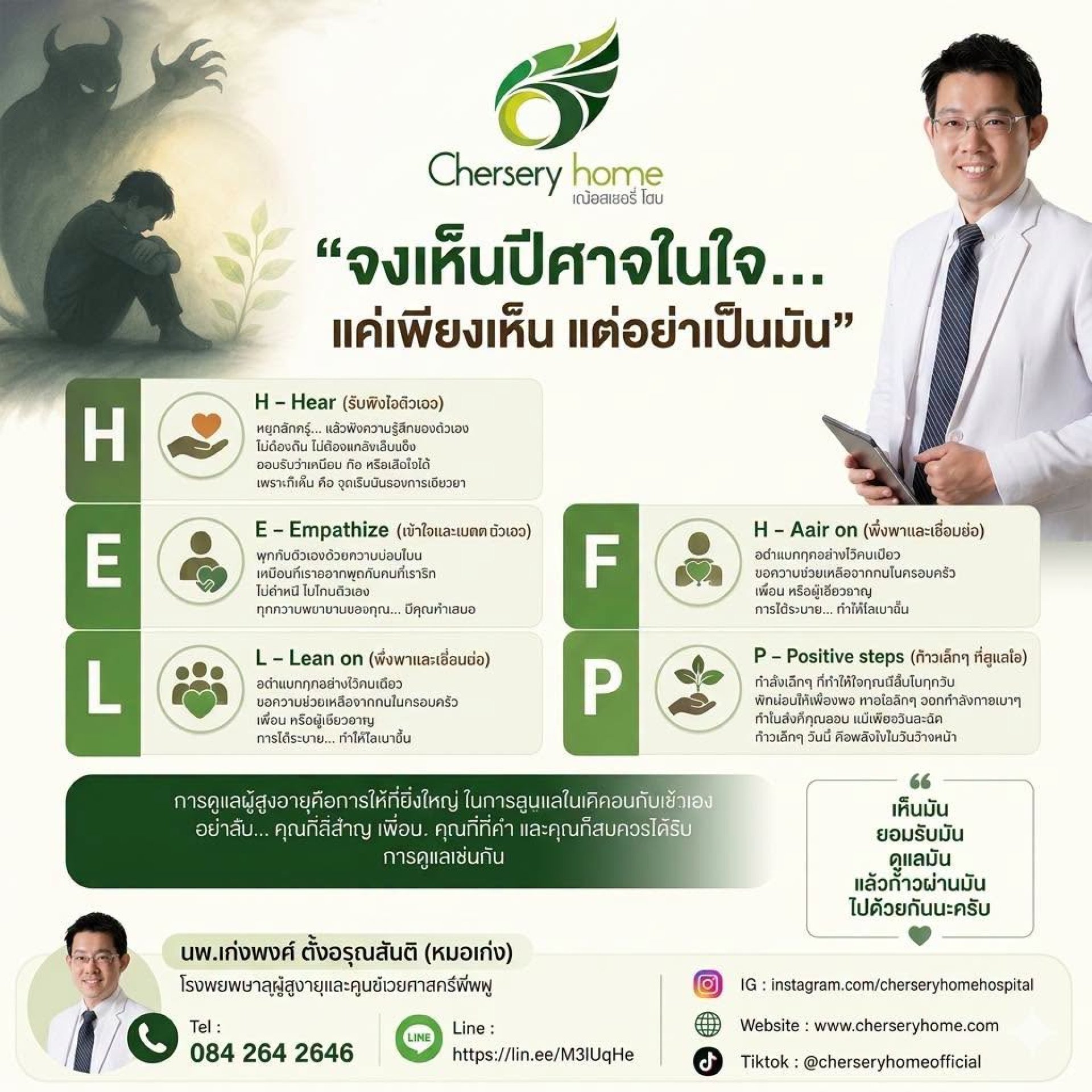
“See the demon within your mind… simply observe it, but do not become it.”
This reflection reminds us that negative thoughts are a natural part of the human mind. The key is not to suppress or become consumed by them, but to recognize them with awareness and distance.
The HELP Principle for Mental Self-Care
For healthcare workers, especially those providing long-term care for older adults, emotional fatigue, self-doubt, and negative internal dialogue can arise. The HELP principle offers a simple framework for mental resilience:
H – Halt
Pause when negative thoughts arise. Do not react immediately.
E – Examine
Observe the thought objectively. Ask: Is this thought true, helpful, or distorted?
L – Label
Name the thought for what it is: fear, stress, self-criticism, or exhaustion.
P – Proceed
Choose a mindful response instead of an emotional reaction. Continue your work with awareness and self-compassion.
Why This Matters in Elderly Care
Caregivers and healthcare professionals working in long-term elderly care settings often face emotional and physical demands. Without proper mental self-care, these pressures may lead to burnout or reduced quality of care.
Practicing emotional awareness helps to:
• Reduce stress and emotional exhaustion
• Improve focus and decision-making
• Strengthen empathy toward patients and families
• Support long-term professional sustainability
A Message for Caregivers
Caring for others begins with caring for the mind that provides care. Recognizing negative thoughts without identifying with them allows healthcare professionals to remain stable, compassionate, and effective in their role.
“Nurture your mind, so you can continue to nurture others.”
Dr. Gengpong Tangaroonsanti (Dr. Geng)
Internal Medicine Physician
Geriatric Hospital and Rehabilitation Center
Chersery Home International
This reflection reminds us that negative thoughts are a natural part of the human mind. The key is not to suppress or become consumed by them, but to recognize them with awareness and distance.
The HELP Principle for Mental Self-Care
For healthcare workers, especially those providing long-term care for older adults, emotional fatigue, self-doubt, and negative internal dialogue can arise. The HELP principle offers a simple framework for mental resilience:
H – Halt
Pause when negative thoughts arise. Do not react immediately.
E – Examine
Observe the thought objectively. Ask: Is this thought true, helpful, or distorted?
L – Label
Name the thought for what it is: fear, stress, self-criticism, or exhaustion.
P – Proceed
Choose a mindful response instead of an emotional reaction. Continue your work with awareness and self-compassion.
Why This Matters in Elderly Care
Caregivers and healthcare professionals working in long-term elderly care settings often face emotional and physical demands. Without proper mental self-care, these pressures may lead to burnout or reduced quality of care.
Practicing emotional awareness helps to:
• Reduce stress and emotional exhaustion
• Improve focus and decision-making
• Strengthen empathy toward patients and families
• Support long-term professional sustainability
A Message for Caregivers
Caring for others begins with caring for the mind that provides care. Recognizing negative thoughts without identifying with them allows healthcare professionals to remain stable, compassionate, and effective in their role.
“Nurture your mind, so you can continue to nurture others.”
Dr. Gengpong Tangaroonsanti (Dr. Geng)
Internal Medicine Physician
Geriatric Hospital and Rehabilitation Center
Chersery Home International
Related Content

ประคบร้อนและประคบเย็น เป็นวิธีการบำบัดและบรรเทาอาการปวดบวมที่อาศัยเทคนิคการใช้ความร้อนและความเย็นช่วนในการปรับสมดุลให้ร่างกาย
19 Mar 2025

Chersery Home International operates four geriatric rehabilitation centers providing comprehensive care for post-surgical patients, stroke rehabilitation, bedridden patients, and palliative care.
24 Jun 2026

Effective rehabilitation is not only about recovering from illness but also about restoring independence, mobility, and quality of life. At Chersery Home International, our multidisciplinary rehabilitation team provides personalized care designed to help patients regain confidence and return to daily activities safely.
16 Jun 2026
