Tracheostomy in Older Adults: Understanding the Benefits, Risks, and Decision-Making Process
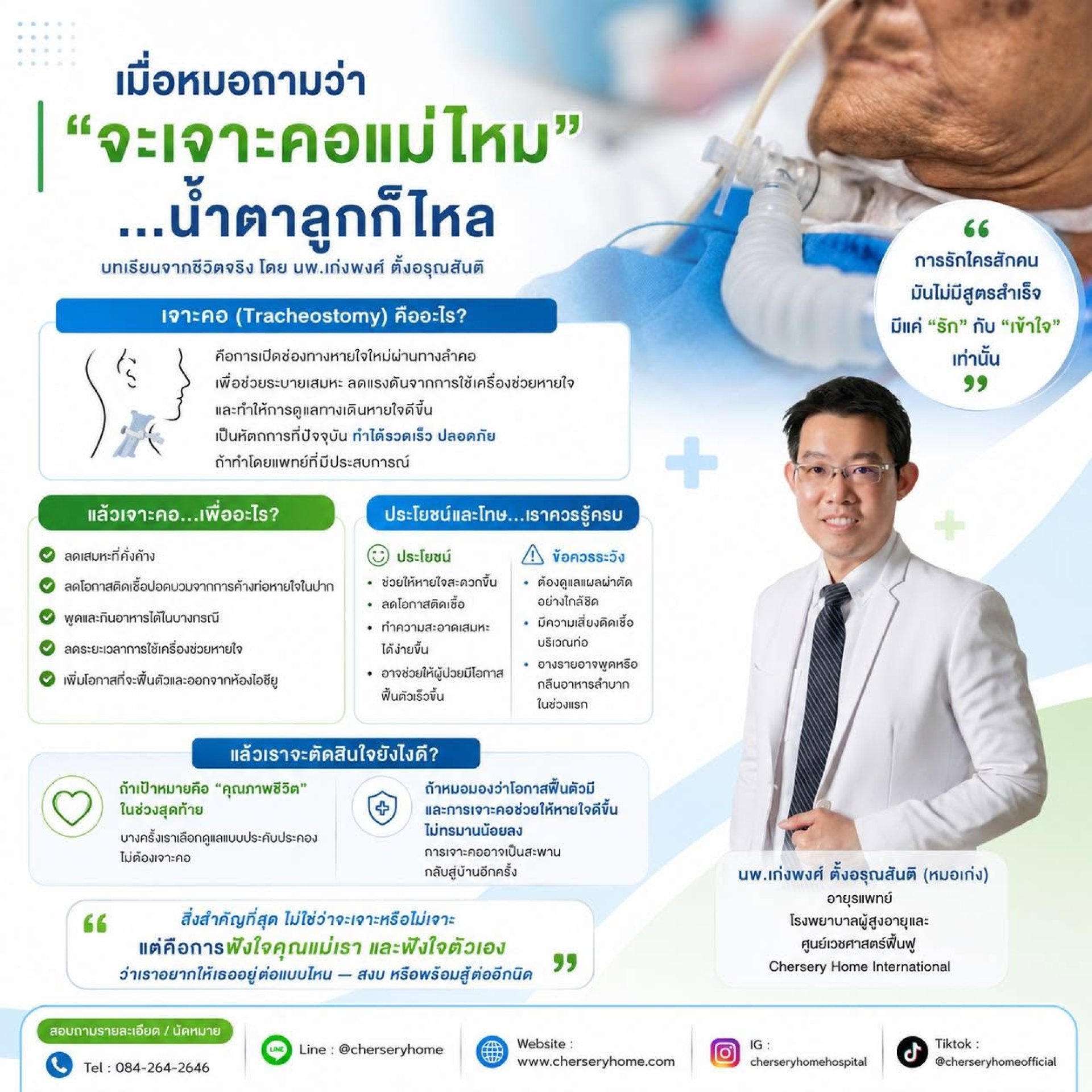
By Dr. Gengpong Tangaroonsanti
Internist
Chersery Home International Hospital and Rehabilitation Center
One of the most challenging conversations families may encounter is when a physician asks whether a tracheostomy should be considered for a loved one.
The decision can be emotionally overwhelming, particularly when caring for an older adult with critical illness or prolonged dependence on mechanical ventilation.
What Is a Tracheostomy?
A tracheostomy is a surgical procedure that creates an opening in the anterior wall of the trachea through the neck, allowing placement of a tracheostomy tube to establish a secure airway.
The procedure facilitates airway clearance, reduces airway resistance associated with prolonged endotracheal intubation, and may improve patient comfort during long-term respiratory support.
Clinical Indications
Tracheostomy may be considered in patients who:
• Require prolonged mechanical ventilation
• Have impaired airway clearance due to excessive respiratory secretions
• Have neuromuscular weakness affecting cough effectiveness
• Require long-term airway protection
Potential Benefits
• Improved secretion management
• Reduced duration of translaryngeal endotracheal intubation
• Lower risk of laryngeal injury associated with prolonged intubation
• Enhanced patient comfort
• Facilitation of ventilator weaning in selected patients
• Increased participation in rehabilitation programs
Risks and Considerations
Although generally considered a safe procedure when performed by experienced clinicians, tracheostomy carries potential risks, including:
• Stomal infection
• Bleeding
• Tracheal injury
• Swallowing impairment
• Communication difficulties during the early post-procedural period
Tracheostomy and Goals of Care
In older adults with advanced frailty, severe neurodegenerative disease, or end-stage illness, the appropriateness of tracheostomy should be evaluated within the context of overall prognosis and goals of care.
Discussions should focus on whether the procedure is likely to improve functional recovery and quality of life, or whether it may prolong life-sustaining treatment without meaningful clinical benefit.
Shared Decision-Making
There is no universally correct decision regarding tracheostomy.
The most appropriate approach is shared decision-making among patients, families, and healthcare professionals, taking into account:
• Clinical prognosis
• Rehabilitation potential
• Patient preferences and values
• Expected quality of life
Ultimately, the goal is to ensure that medical interventions align with the patient's wishes, dignity, and overall care objectives.
For further information or consultation, please contact Chersery Home International.