Office Syndrome Checklist: What Level Are You At?
Last updated: 15 May 2026
1104 Views
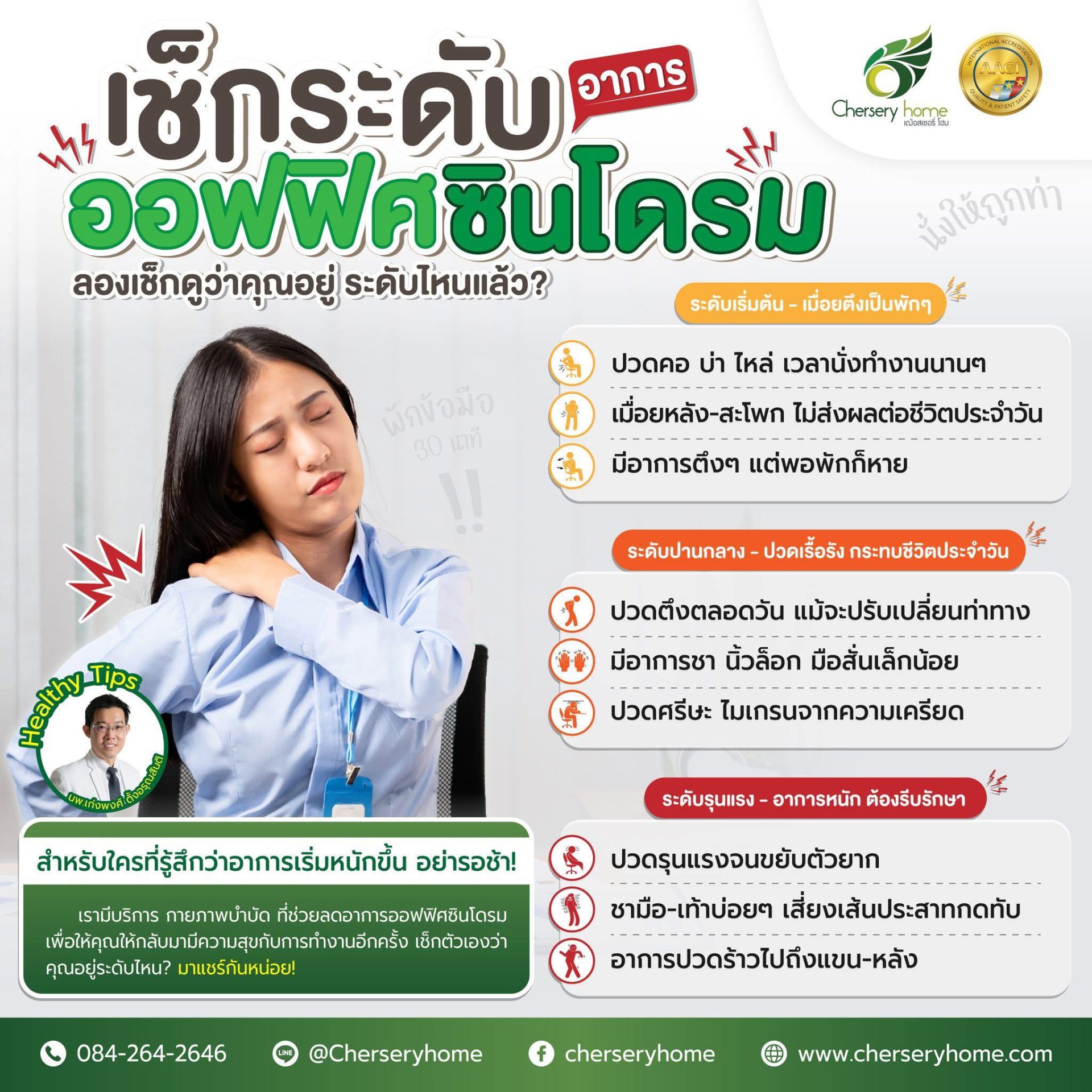
Office Syndrome refers to muscle pain and discomfort caused by prolonged sitting and repetitive work posture, especially among people who work with computers or smartphones for long hours.
Let’s check which level you are currently experiencing.
Mild Level – Occasional muscle stiffness
Neck, shoulder, and upper back pain after long sitting hours
Mild lower back or hip discomfort that does not affect daily life
Tightness that improves after rest
Moderate Level – Chronic pain affecting daily life
Persistent muscle pain even after adjusting posture
Numbness, finger stiffness, or mild hand tremors
Headaches or migraines caused by stress
Severe Level – Requires medical attention
Intense pain that makes movement difficult
Frequent numbness in hands or feet, possible nerve compression
Pain radiating to arms, back, or shoulders
If you are experiencing moderate to severe symptoms, it is important to adjust your work habits and seek professional care to prevent long-term complications.
Let’s check which level you are currently experiencing.
Mild Level – Occasional muscle stiffness
Neck, shoulder, and upper back pain after long sitting hours
Mild lower back or hip discomfort that does not affect daily life
Tightness that improves after rest
Moderate Level – Chronic pain affecting daily life
Persistent muscle pain even after adjusting posture
Numbness, finger stiffness, or mild hand tremors
Headaches or migraines caused by stress
Severe Level – Requires medical attention
Intense pain that makes movement difficult
Frequent numbness in hands or feet, possible nerve compression
Pain radiating to arms, back, or shoulders
If you are experiencing moderate to severe symptoms, it is important to adjust your work habits and seek professional care to prevent long-term complications.
Related Content

When a loved one faces a life-threatening illness, families are often asked whether to proceed with intubation and life-sustaining treatments. While these interventions may prolong life, they may not always preserve the quality of life a patient desires. This article explores the importance of dignity, Advance Directives, and Palliative Care in helping families make compassionate and informed decisions during end-of-life care.
16 Jun 2026
Learn how proper nutrition supports elderly health, including daily calorie needs, balanced meals, and lifestyle tips for stronger, healthier aging.
20 Apr 2026

Airway Clearance Techniques (ACTs) are therapeutic methods designed to help remove excess mucus and respiratory secretions from the airways. These techniques can improve breathing efficiency, reduce the risk of respiratory complications, and support overall lung health, particularly in older adults and individuals with chronic respiratory conditions.
17 Jun 2026
