Why Older Adults Should Do Squats: A Key Exercise for Strength and Fall Prevention
Last updated: 24 Jun 2026
1720 Views
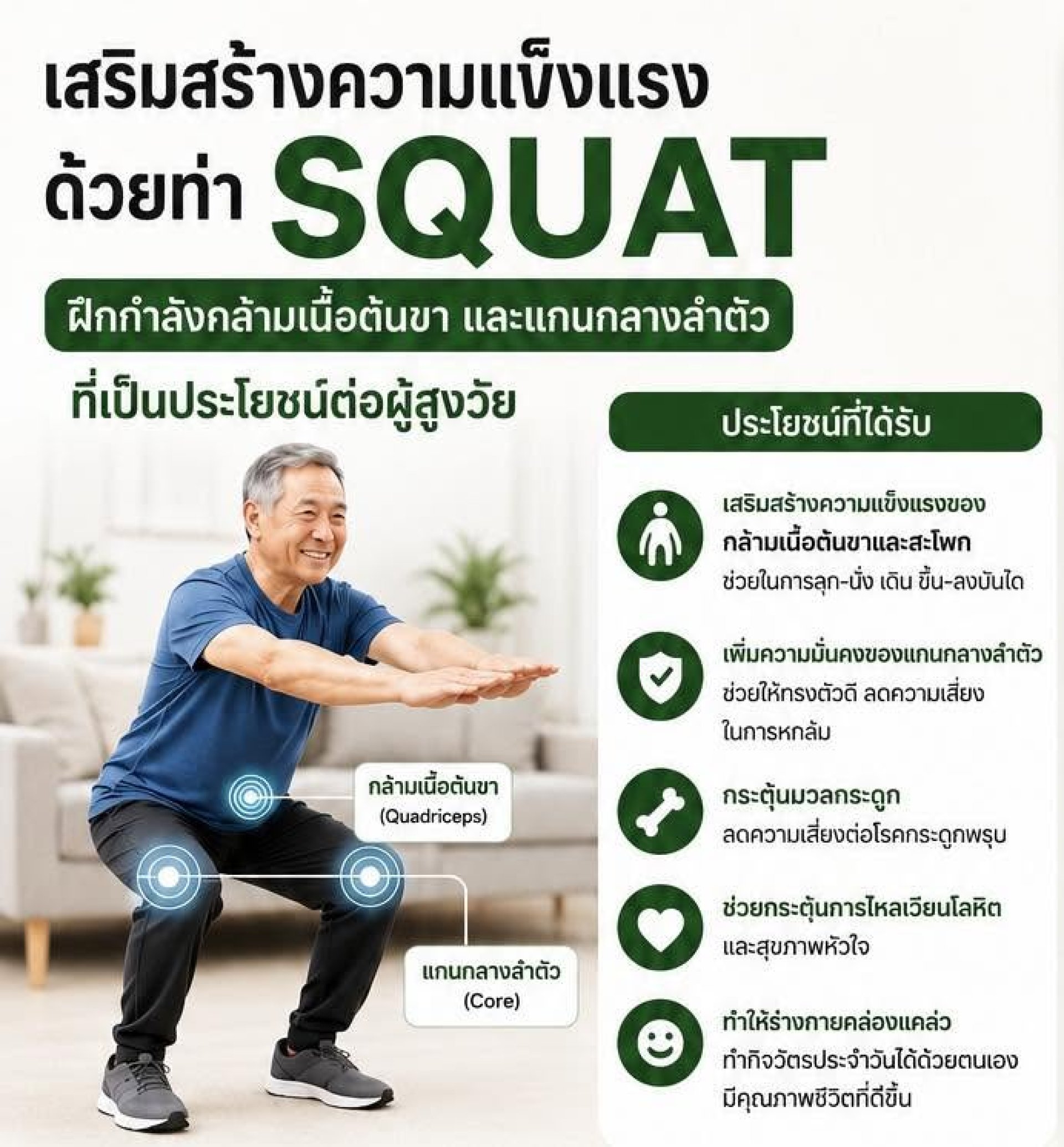
️♂️ Why Should Older Adults Do Squats?
By Dr. Gengpong Tangaroonsanti
Internal Medicine Physician
Chersery Home International
If there is only one exercise recommended for older adults, the squat is often considered one of the most beneficial.
Squats engage multiple large muscle groups at the same time, including the thighs, hips, glutes, and core muscles. These muscles are essential for daily movement and functional independence.
✅ 5 Key Benefits of Squats for Older Adults
Improves Lower Limb Strength
Helps with standing up, sitting down, walking, and climbing stairs more easily.
Reduces Risk of Falls
Enhances leg strength and balance, leading to more stable walking and movement.
Helps Prevent Sarcopenia
Slows down age-related muscle loss and helps maintain muscle mass.
Strengthens Core Stability
Improves posture, reduces back pain, and enhances overall balance.
Supports Daily Functional Ability
Helps older adults maintain independence and improve quality of life.
Safe Squat Techniques for Older Adults
✔ Stand with feet shoulder-width apart
✔ Keep the back straight and eyes forward
✔ Push hips backward as if sitting on a chair
✔ Do not let knees go too far beyond the toes
✔ Engage the core muscles gently
✔ Inhale while lowering, exhale while standing up
✔ Start with 10–15 repetitions per set, 1–3 sets per day
Simple Squat Variations at Home
Chair Squat – Sit down and stand up slowly from a chair
Supported Squat – Hold onto a chair or table for balance
Mini Squat – Small range movement for beginners
Wall Squat – Perform against a wall for stability and support
⚠️ Precautions
Older adults with knee pain, dizziness, heart disease, or a history of falls should consult a physician before starting exercise.
Summary
“Leg strength is the health savings account of older adults.”
Stronger muscles lead to better independence, safer mobility, and improved long-term quality of life.
Chersery Home International
Geriatric Hospital and Rehabilitation Center
Related Content

ประคบร้อนและประคบเย็น เป็นวิธีการบำบัดและบรรเทาอาการปวดบวมที่อาศัยเทคนิคการใช้ความร้อนและความเย็นช่วนในการปรับสมดุลให้ร่างกาย
19 Mar 2025
Quality rehabilitation requires more than medical treatment alone. It depends on a dedicated nursing team that provides continuous care, close monitoring, and compassionate support throughout every stage of recovery. Discover the six essential roles of our nursing team and how Chersery Home International delivers world-class senior care and rehabilitation under AACI international standards.
15 Jun 2026
Learn how proper nutrition supports elderly health, including daily calorie needs, balanced meals, and lifestyle tips for stronger, healthier aging.
20 Apr 2026
