5 Ways to Keep Your Brain Sharp as You Age
Last updated: 2 Jun 2026
985 Views
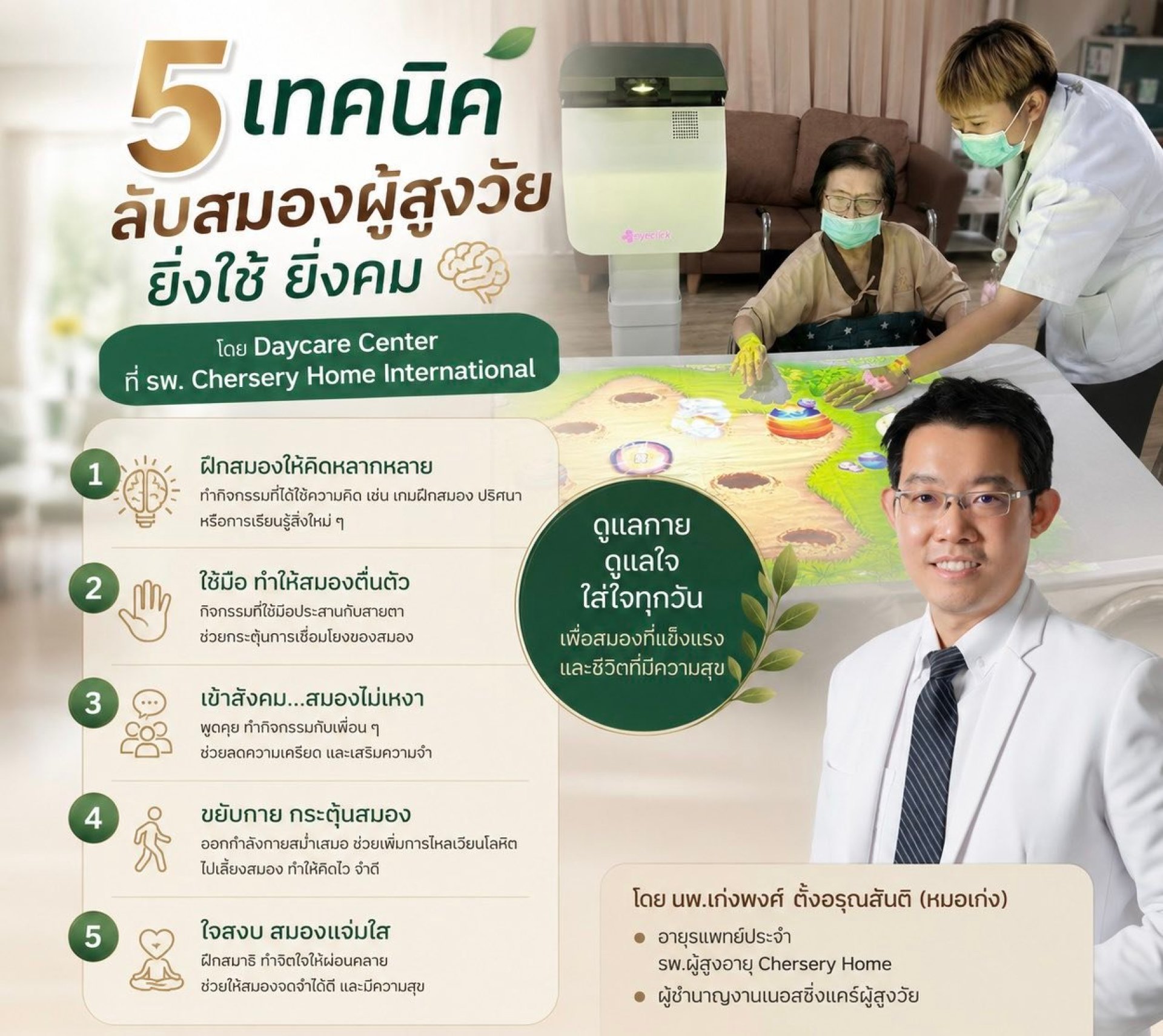
5 Ways to Keep Your Brain Sharp as You Age
By Dr. Gengpong Tangaroonsanti
Chersery Home International
After many years of caring for older adults, I have learned that what many seniors fear most is not simply illness itself.
It is the gradual loss of precious memories — forgetting the names of loved ones, familiar places, or even parts of their own identity.
The good news is that the brain remains trainable throughout life.
Just like our muscles, the brain benefits from regular exercise and stimulation. With the right habits, we can help slow cognitive decline and maintain brain health for years to come.
Here are five simple strategies that I regularly recommend to my patients and families.
━━━━━━━━━━━━━━
✅ 1. Keep a Daily Journal
Writing things down helps engage memory, planning, and attention.
I often encourage older adults to keep a simple notebook to record daily activities, appointments, medications, or personal goals.
Dr. Gengpong’s Tip:
Start each morning by writing down three things you would like to do for yourself that day.
Benefits:
• Improves memory retention
• Supports organization and planning
• Keeps the mind actively engaged
━━━━━━━━━━━━━━
✅ 2. Find a Meaningful Hobby
Activities such as painting, gardening, crafting, knitting, puzzles, or Sudoku can stimulate different areas of the brain while bringing joy and purpose.
A hobby is not just a pastime—it is a powerful way to keep the brain active and connected to life.
Dr. Gengpong’s Tip:
Explore new hobbies through YouTube or community groups. It’s never too late to learn something new.
Benefits:
• Encourages creativity
• Improves concentration
• Supports emotional well-being
━━━━━━━━━━━━━━
✅ 3. Stay Socially and Emotionally Connected
Spending time with family, friends, grandchildren, or community groups can have a significant positive impact on brain health.
Positive social interaction has been shown to reduce stress hormones while supporting chemicals associated with happiness and emotional balance.
Dr. Gengpong’s Tip:
Join local senior clubs, group exercise classes, music groups, or volunteer activities to stay socially engaged.
Benefits:
• Reduces stress
• Improves mood
• Supports memory and emotional health
━━━━━━━━━━━━━━
✅ 4. Keep Moving
The brain and body work as one team.
Regular physical activity increases blood flow to the brain and helps maintain healthy brain function.
Research suggests that moderate exercise may help reduce the risk of cognitive decline and dementia.
Dr. Gengpong’s Tip:
A simple 30-minute walk most days of the week can make a meaningful difference. Gentle stretching or low-impact exercises are also excellent options.
Benefits:
• Improves circulation
• Supports cognitive function
• Helps maintain independence
━━━━━━━━━━━━━━
✅ 5. Limit or Avoid Alcohol
Excessive alcohol consumption can negatively affect memory, balance, and overall brain health.
Among older adults, long-term alcohol use may contribute to faster cognitive decline and increase the risk of falls and injuries.
Dr. Gengpong’s Tip:
If you enjoy having a drink to relax, consider healthier alternatives such as herbal tea, smoothies, or fresh fruit juices.
Benefits:
• Supports brain health
• Improves balance and coordination
• Promotes long-term well-being
━━━━━━━━━━━━━━
A Message from Dr. Gengpong
“A healthy brain is not simply a brain that remembers everything. It is a brain that continues to learn, connect, feel, and engage with life.”
A meaningful life begins with the ability to think, feel, and appreciate our own value.
I hope each of you can continue to enjoy a bright, active, and fulfilling life with a healthy mind for many years to come.
With warm regards,
Dr. Gengpong Tangaroonsanti
Consultant in Internal Medicine
Specialist in Senior Care & Nursing Care Management
Chersery Home International
For appointments and inquiries:
Tel: +66 84 264 2646
Line: https://lin.ee/M3iUqHe
Instagram: @cherseryhomehospital
Website: www.cherseryhome.com
TikTok: @cherseryhomeofficial
By Dr. Gengpong Tangaroonsanti
Chersery Home International
After many years of caring for older adults, I have learned that what many seniors fear most is not simply illness itself.
It is the gradual loss of precious memories — forgetting the names of loved ones, familiar places, or even parts of their own identity.
The good news is that the brain remains trainable throughout life.
Just like our muscles, the brain benefits from regular exercise and stimulation. With the right habits, we can help slow cognitive decline and maintain brain health for years to come.
Here are five simple strategies that I regularly recommend to my patients and families.
━━━━━━━━━━━━━━
✅ 1. Keep a Daily Journal
Writing things down helps engage memory, planning, and attention.
I often encourage older adults to keep a simple notebook to record daily activities, appointments, medications, or personal goals.
Dr. Gengpong’s Tip:
Start each morning by writing down three things you would like to do for yourself that day.
Benefits:
• Improves memory retention
• Supports organization and planning
• Keeps the mind actively engaged
━━━━━━━━━━━━━━
✅ 2. Find a Meaningful Hobby
Activities such as painting, gardening, crafting, knitting, puzzles, or Sudoku can stimulate different areas of the brain while bringing joy and purpose.
A hobby is not just a pastime—it is a powerful way to keep the brain active and connected to life.
Dr. Gengpong’s Tip:
Explore new hobbies through YouTube or community groups. It’s never too late to learn something new.
Benefits:
• Encourages creativity
• Improves concentration
• Supports emotional well-being
━━━━━━━━━━━━━━
✅ 3. Stay Socially and Emotionally Connected
Spending time with family, friends, grandchildren, or community groups can have a significant positive impact on brain health.
Positive social interaction has been shown to reduce stress hormones while supporting chemicals associated with happiness and emotional balance.
Dr. Gengpong’s Tip:
Join local senior clubs, group exercise classes, music groups, or volunteer activities to stay socially engaged.
Benefits:
• Reduces stress
• Improves mood
• Supports memory and emotional health
━━━━━━━━━━━━━━
✅ 4. Keep Moving
The brain and body work as one team.
Regular physical activity increases blood flow to the brain and helps maintain healthy brain function.
Research suggests that moderate exercise may help reduce the risk of cognitive decline and dementia.
Dr. Gengpong’s Tip:
A simple 30-minute walk most days of the week can make a meaningful difference. Gentle stretching or low-impact exercises are also excellent options.
Benefits:
• Improves circulation
• Supports cognitive function
• Helps maintain independence
━━━━━━━━━━━━━━
✅ 5. Limit or Avoid Alcohol
Excessive alcohol consumption can negatively affect memory, balance, and overall brain health.
Among older adults, long-term alcohol use may contribute to faster cognitive decline and increase the risk of falls and injuries.
Dr. Gengpong’s Tip:
If you enjoy having a drink to relax, consider healthier alternatives such as herbal tea, smoothies, or fresh fruit juices.
Benefits:
• Supports brain health
• Improves balance and coordination
• Promotes long-term well-being
━━━━━━━━━━━━━━
A Message from Dr. Gengpong
“A healthy brain is not simply a brain that remembers everything. It is a brain that continues to learn, connect, feel, and engage with life.”
A meaningful life begins with the ability to think, feel, and appreciate our own value.
I hope each of you can continue to enjoy a bright, active, and fulfilling life with a healthy mind for many years to come.
With warm regards,
Dr. Gengpong Tangaroonsanti
Consultant in Internal Medicine
Specialist in Senior Care & Nursing Care Management
Chersery Home International
For appointments and inquiries:
Tel: +66 84 264 2646
Line: https://lin.ee/M3iUqHe
Instagram: @cherseryhomehospital
Website: www.cherseryhome.com
TikTok: @cherseryhomeofficial


Related Content


Chersery Home International, a leading provider of senior care, rehabilitation, and long-term care services in Thailand, is preparing to sign a Memorandum of Understanding (MOU) with Thai Life Insurance. The partnership aims to strengthen patient referral systems and improve access to high-quality rehabilitation and recovery services for patients transitioning from hospital care.
18 Jun 2026